
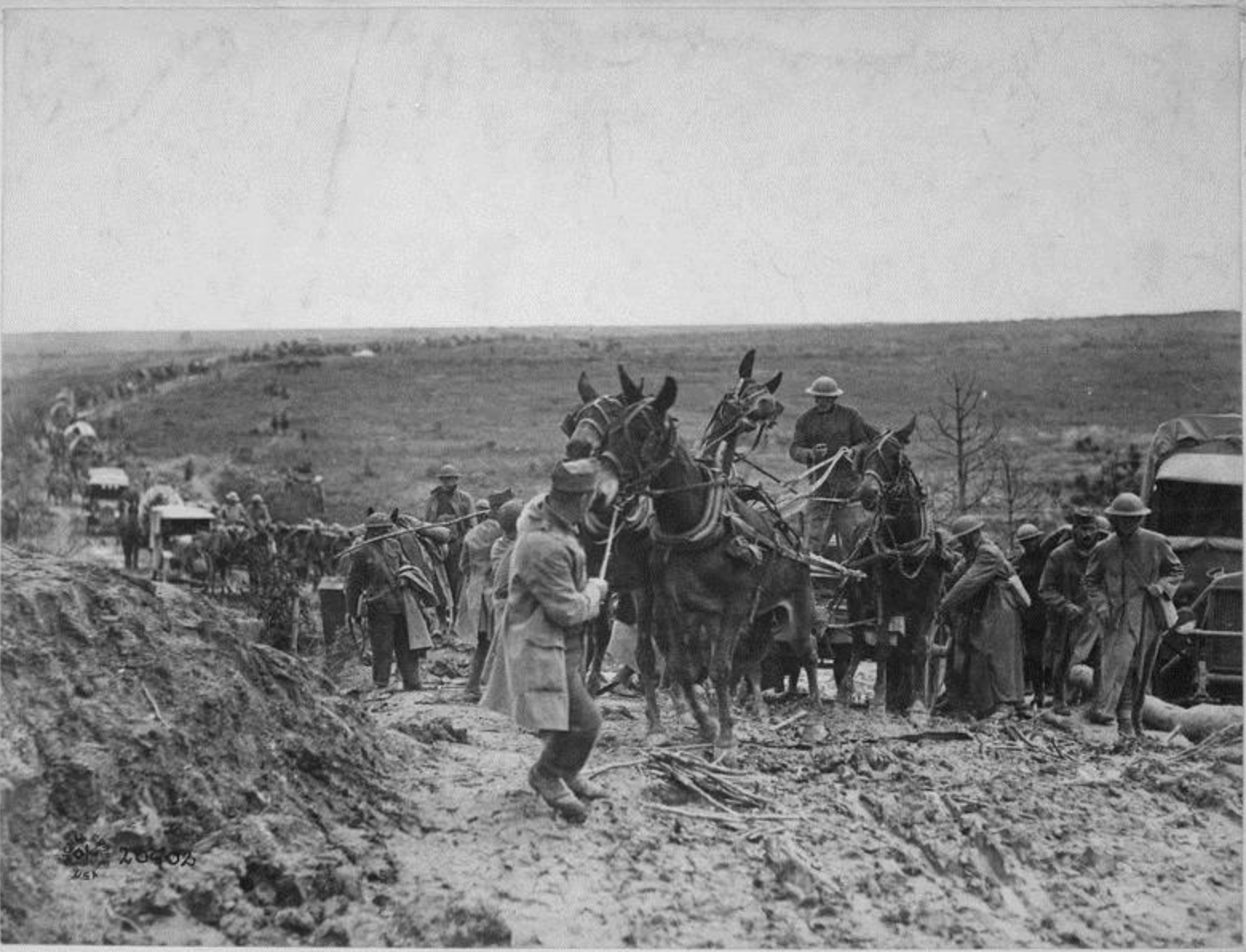
“When the First World War blazed across Europe, 25,000 mules were sent overseas in 1917 with the A.E.F., and while one of them was proclaimed a hero, five thousand of that number paid the final price of life itself.”
The mule, long the Army’s traditional all purpose animal, has always covered himself with glory during war years. Horses were high strung and uneasy under gunfire, whereas their jug-headed, unbeautiful first cousins remained cool, with an apparent contempt for gunfire.
But the comparison doesn’t stop there. A mule could carry more weight over worse terrain than a horse, whereas the latter seemed to be unable to protest when about to be overloaded, and was apt to gorge himself on feed. But not so with the mule. He had a prudent attitude toward the feed box and readily knew how much load he could pack without falling down.
When the First World War blazed across Europe, 25,000 mules were sent overseas in 1917 with the A.E.F., and while one of them was proclaimed a hero, five thousand of that number paid the final price of life itself. And even during the tragic years of the Civil War, those mud sloggers were such a necessity to the Army and Government, where six-mule team trains played such an important role in supplying the Army, that depots and corrals were provided for the tens of thousands of mules used.
Mule pack trains figured conspicuously in our Nation’s Indian Wars. Carrying forage and food, such trains followed many a command day or night into any locaility no matter how thickly wooded or how rugged the terrain.
J.L. Allhands
The Mule, 1965
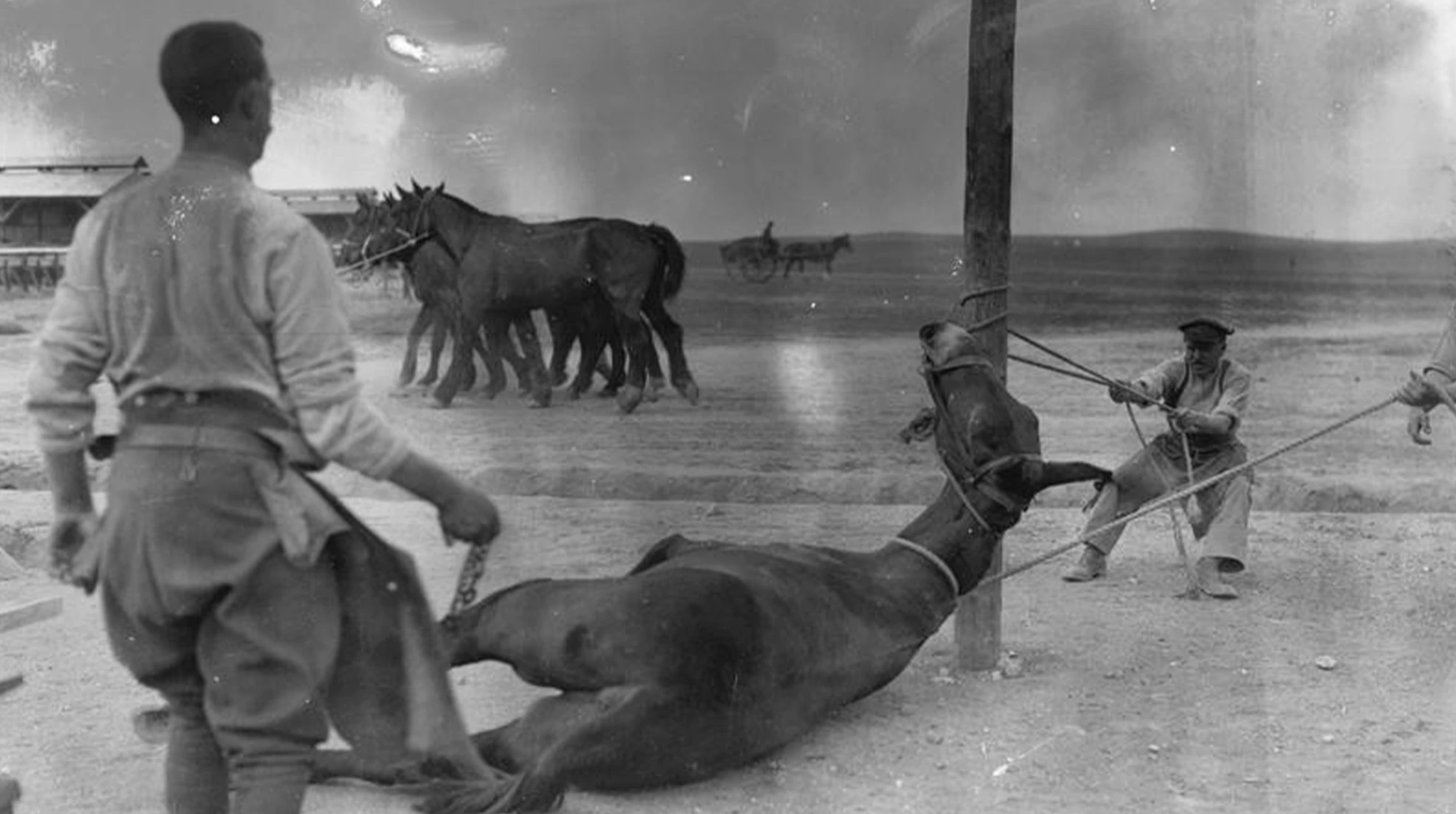
During World War II, Dr. Andy Crawford of Rolling Fork was Port Veterinarian and Remount Officer at the Port of Embarkation in New Orleans. It was his job to see that shiploads of mules and the men who cared for them reached their destinations abroad safe and healthy.
The mule ships, converted from liberty and cargo ships into “floating barns”, transported mules for use in Burma, China, and Italy, where they were needed to carry medical supplies, food, and other essentials over rugged and treacherous terrain in the war arena.
“The need for mules was great. Their presence in certain areas meant a great deal for the troops because the food and equipment of war could not be brought in by any other means except pack animals.
The soldierly way in which the mule took his part won the respect and gratitude of all who saw him in port, on the high seas, or in foreign combat. The mule was the unsung hero of World War II.”
Andy Crawford, D.V.M.
Mules Go To War, 1980